The Biggest Bluff: How I Learned to Pay Attention, Master Myself, and Win
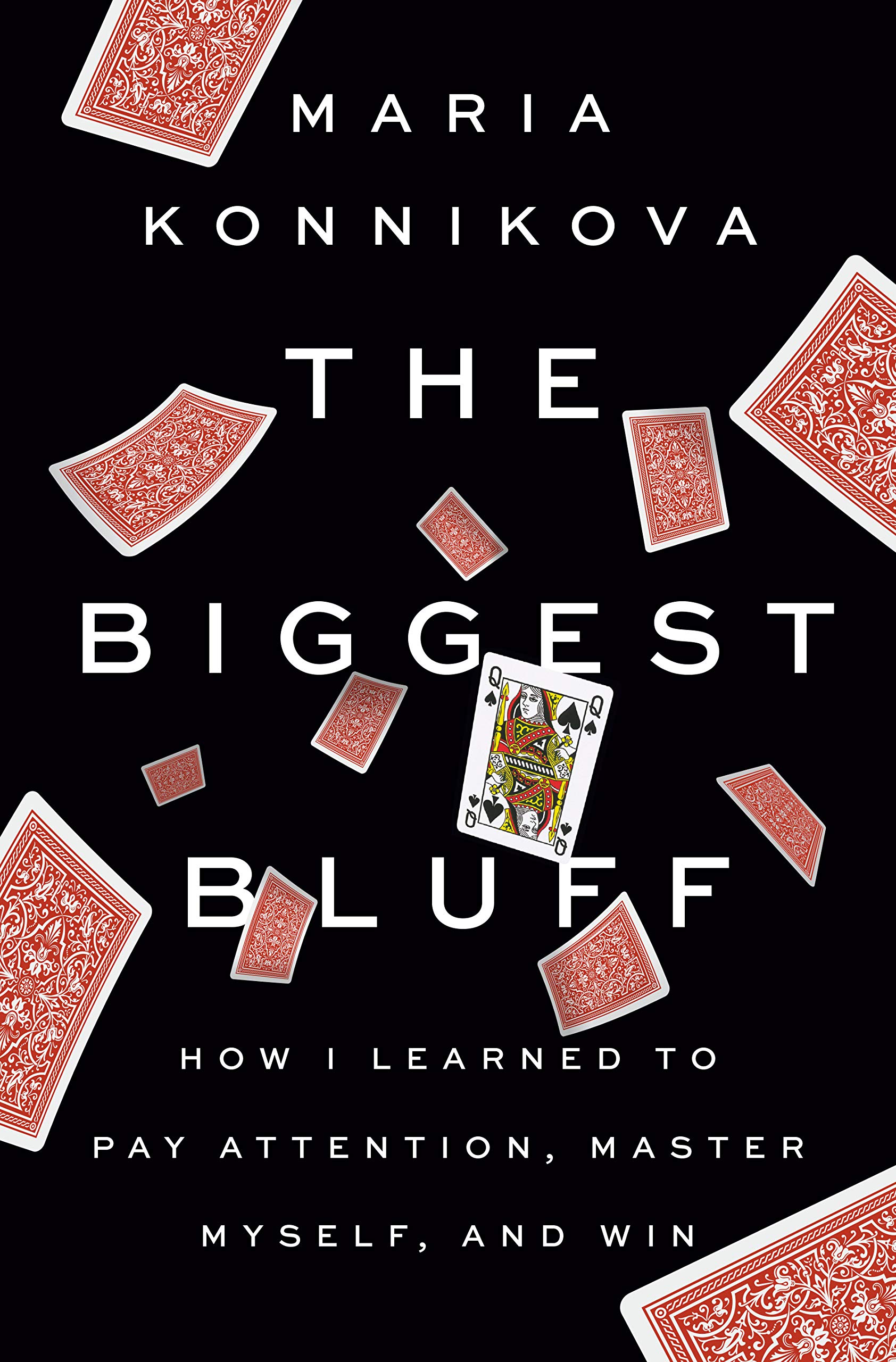
 Download As PDF : The Biggest Bluff: How I Learned to Pay Attention, Master Myself, and Win

The Biggest Bluff: How I Learned to Pay Attention, Master Myself, and Win
In April, I read somewhere that Maria Konnikova had become a poker pro and won over $200k in prize money. Huh?! Same social psychology PhD Konnikova who wrote for The New Yorker? And 'The Confidence Game' and 'Mastermind: How to Think Like Sherlock Holmes'? This seemed so farfetched that I just had to find out more. Especially since I'm a social psych aficionado and once was a semipro player myself. How did she train up to play well enough to win a big tourney in less than a year? Who taught her? Could a psych PhD trained in cognitive biases by the great Walter Mischel of marshmallow-test fame apply her knowledge to the game, or will she be a fumbling mortal like the rest of us? And, of all the pain one could inflict upon oneself in the name of journalism, why poker?! Does she enjoy sitting at a table for days on end with guys who frankly smell funny? So many questions. I had no choice but to pre-order the book to find out more.When the ebook arrived last night, I consumed it one sitting. The tale of Konnikova going from 100% poker-naïve novice to sponsored pro in a year is crackingly compelling. No triumphalist tale here. She's candid about the painful process of improving via trial and error and error and error: impatience, misplaced pride, susceptibility to the biases she has written whole books about, and incomplete self-knowledge. But she also has the insight and humility to ask for help from a mindset coach, who apparently makes some difference (even though he quotes Freud, and it's not exactly clear *how* he changes mindset -- this here coach is curious to know). She endures enough crap -- crippling self-doubt, insomnia, sexism, vicious migraines, perfidious allies, crude propositions by creepy dudes -- that when she describes her first big tournament win, I threw my hands in the air and audibly woo-hooed. Her victory is every smart, hard-working underdog's victory.The heart of the book is her relationship with her poker coach, Erik Seidel, one of the game's all-time greats. A deeply wise and caring mentor, he dispenses advice that is not just timeless but omni-applicable: "Telling bad beat stories is like dumping trash on your neighbor's lawn: it just stinks. The goal of poker is not to win pots or chips but to make good decisions. Defeat teaches you more than victory. Don't play a tournament if you don't feel at your best." We all wish we could have a mentor this good.I also picked up on a lot of useful resources to improve my own game: the PioSOLVER software for game-theory optimized play; SnapShove; Phil Galfond's Run It Once coaching site; and live streaming of real hands played by pros. These alone were easily worth the cover price.What delighted me was Maria's interweaving of the scientific literature into her narrative of training and tournament play. The description-experience gap will make our gut feelings trump numerical rules. Only a third of tournament hands go to showdown, and the best hand only wins 12% of the time. Facial tells are worse than useless; look at hand motions instead. Her long digression into the science and lore of superstition was particularly fun. If you have a lucky shirt or necklace, Konnikova makes a persuasive case for getting rid of it.This is also a book about entrepreneurship: setting a goal, assembling a team, getting some funding, and executing on the plan. That funding part is pretty essential, because hey, world-class poker training don't come cheap. Poker coaches can charge hundreds of dollars an hour, well beyond the reach of mere mortals without a substantial bankroll or publisher's advance. This is a detail I wish the book shared more about.Finally, there's much dishy poker lore here. Konnikova has met some greats of the game - Paul Magriel, LuckyChewy, Ike Haxton, Patrik Antonius, and my personal hero "Action Dan" Harrington - and retells stories from legends like Doyle Brunson, Antonio Esfandiari and Phil Laak. Thanks to Maria, our home games will probably soon feature the silly but fun sides bets of the Lodden Game.Even though the bits of poker strategy Konnikova shares are incidental to the storytelling and not the book's main show, I learned more about the psychology of my own game from this book than dozens of pure strategy books I've read. Besides being a cracking tale, 'The Biggest Bluff' is about how seemingly unlikely results can come within reach through persistence, planning, systematic training, and mindset management. Konnikova has earned every bit of her excellent results, one of them being this book. How about you? May the book serve as rocket fuel for your own farfetched daydreams, or that of your favorite budding entrepreneur.-- Ali Binazir, M.D., M.Phil., Happiness Engineer, poker therapist, executive coach and author of
The Tao of Dating: The Smart Woman's Guide to Being Absolutely Irresistible
, the most-highlighted book in Amazon Kindle Store, and
Should I Go to Medical School?: An Irreverent Guide to the Pros and Cons of a Career in Medicine